

16 Mar Choose Your Osteopathy School Carefully
Unfortunately, there are a few osteopathy schools in Canada that are misleading students and engaging in questionable practices.
Some operate out of small clinics without a proper campus or faculty, often relying on only one or two individuals. Others offer diplomas with little or no real education, or provide only PDF files instead of structured instruction. Some claim to provide thousands of hours of training when the actual instruction is far less. I am aware of one program that provides only about 32 hours of education over an entire year while presenting it as a full-year program. In some cases, schools have even copied the National Academy of Osteopathy curriculum word-for-word without actually offering the same level of training.
Recently, a student who was planning to enroll in one such school contacted us. She explained that the school was still collecting tuition even though its phone service had been disconnected and rent had reportedly not been paid for several months. After discovering this situation, she decided to transfer to the National Academy of Osteopathy.
One reason I appreciate the regulatory structure in the United States is that we hold the exclusive authority to issue the ROMP (Registered Osteopathic Manual Practitioner) designation through the American Association of Osteopathic Manual Practitioners. This credential is required to obtain the GEHA license to practice in all 50 states. As a result, we can help ensure that poorly trained or fraudulent practitioners are not able to obtain a license to practice there. In Canada, a similar level of protection can occur through insurance coverage, by ensuring that graduates of questionable programs are not accepted into associations that are recognized by insurers.
Unfortunately, some associations initially accept graduates from these schools without fully verifying the quality of the education provided. However, our alumni are very vigilant, and when concerns arise they often report these situations to the associations. In many cases this eventually leads to those schools being removed from approved lists, ensuring that only graduates of legitimate programs remain eligible for insurance coverage.
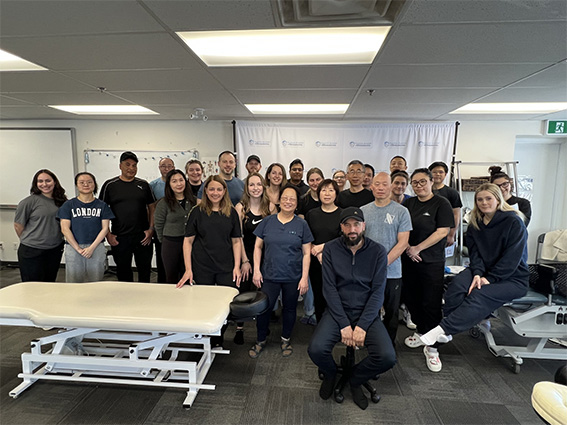
For this reason, I strongly encourage prospective students to do careful research before enrolling in any osteopathy program. Ask how many instructors the school has (are their photos published on the school website?) and whether it operates from a real campus (are there photos of a campus, not just a clinic?). Look for evidence of students training in person and practicing techniques (does the website have any such photos?). Ask how long the school has been teaching osteopathy and whether its graduates are easy to locate online so you can speak with them about their experience. Confirm whether graduates are accepted by most health insurers and whether the diploma offered is legitimate, properly issued and not copyrighted.
Tuition should never be the only factor when choosing a school. Programs that charge extremely low tuition often lack the educational structure required to properly train practitioners. Many such schools appear for a short time and then disappear, leaving students with a diploma that cannot be used professionally. We also ensure that graduates from these types of programs are not eligible to obtain the ROMP designation required to practice in the United States.
Please take the time to investigate carefully before committing to any program.